Is Myopia Hereditary? What Parents Should Know About Family Risk Factors
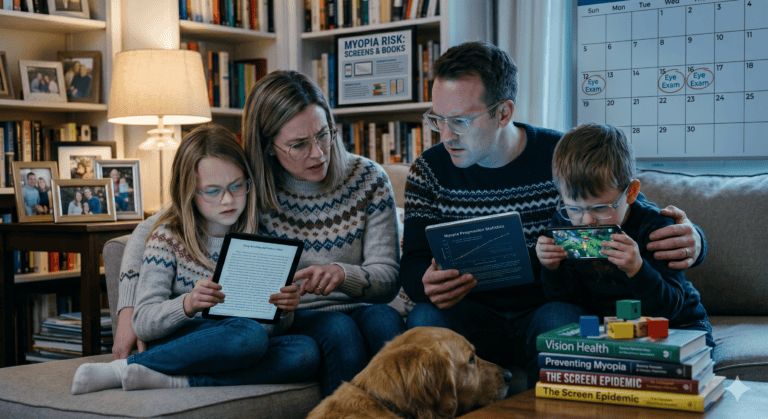
Myopia in kids is becoming increasingly common, and many parents are asking whether genetics play a role in their child’s vision. Concerns about nearsightedness, family history of myopia, children’s eye health, screen time, and outdoor activity are all closely connected to how vision develops during childhood. Understanding how these factors interact can help parents make informed decisions and protect their child’s long-term eye health.
Understanding Myopia in Children
Myopia, or nearsightedness, is a condition where distant objects appear blurry while close-up vision remains clear. It often begins during school-age years and can progress as a child grows. In recent years, eye care professionals have seen a sharp rise in myopia in kids worldwide, making it a growing public health concern.
For parents, one of the first questions is simple: Is this something my child inherited from me? The answer is nuanced. Genetics do play a major role but they are only part of the story.
The Genetic Link: Is Myopia Hereditary?
Research consistently shows that myopia has a strong hereditary component. If you or your partner are nearsighted, your child is more likely to develop myopia compared to children with no family history.
Large-scale genetic studies have identified hundreds of genes associated with refractive error. This means myopia is not caused by a single gene but is polygenic, involving many genetic factors working together. As a result, risk increases gradually rather than being an all-or-nothing outcome.
Here’s what that means in practical terms:
If one parent has myopia, the child’s risk increases
If both parents have myopia, the risk increases significantly
Children with strong genetic risk may develop myopia earlier and progress faster
Family history is one of the most reliable predictors eye doctors use when assessing a child’s risk profile. In a clinical setting, this is often one of the first questions asked during a pediatric eye exam.
Genetics vs. Environment: It’s Not Just in Your DNA
While genetics set the stage, environment determines much of how the condition develops. Think of it this way: genes may load the gun, but lifestyle pulls the trigger.
Modern research emphasizes a gene–environment interaction, meaning children with a genetic predisposition are more sensitive to environmental influences such as:
1. Near Work Activities
Extended periods of close-up tasks—like reading, writing, or screen use—are strongly associated with myopia progression. This is especially true when children hold devices too close or take few breaks.
2. Limited Outdoor Time
Spending less time outdoors has been consistently linked to higher rates of myopia. Natural light exposure appears to play a protective role in eye development.
3. Screen Time Habits
Digital devices have become a major part of childhood. Increased screen time, especially without proper breaks, can accelerate vision changes in at-risk children.
For children with myopic parents, these environmental factors matter even more. Studies show they are more susceptible to developing myopia when exposed to high levels of near work and low outdoor activity.
How Family History Affects Myopia Progression
Not only does heredity influence whether a child develops myopia—it also affects how quickly it progresses.
Children with two myopic parents tend to:
- Develop myopia at a younger age
- Experience faster progression year over year
- Reach higher levels of nearsightedness over time
This makes early monitoring especially important. In practices across New York City, eye doctors often recommend earlier and more frequent exams for children with a known family history.
Early detection allows for timely interventions, which may help slow progression and reduce the risk of high myopia later in life.
What Parents Can Do to Reduce Risk
Even if your child has a genetic predisposition, there are practical steps you can take to support healthy vision development.
Encourage Outdoor Time
Aim for at least 1–2 hours of outdoor activity daily. Exposure to natural light has been shown to reduce the likelihood of developing myopia, even in high-risk children.
Manage Screen Time and Near Work
Follow the 20-20-20 rule: every 20 minutes, have your child look at something 20 feet away for at least 20 seconds.
Also encourage:
- Holding books and screens at a comfortable distance
- Avoiding prolonged use without breaks
- Maintaining good posture while reading or using devices
- Schedule Regular Eye Exams
Children with a family history of myopia should have routine comprehensive eye exams, even if no symptoms are present.
Early exams can detect subtle changes before they become noticeable, allowing for proactive management.
Create a Vision-Friendly Environment
Small adjustments at home can make a big difference:
- Ensure good lighting while reading or studying
- Set limits on recreational screen use
- Encourage a balance between indoor and outdoor activities
When Should You Be Concerned?
Parents should watch for early signs of myopia in kids, especially if there is a known family history. These signs may include:
- Squinting to see distant objects
- Sitting very close to screens or the TV
- Complaints of headaches or eye strain
- Difficulty seeing the board at school
If you notice any of these behaviors, it’s a good idea to schedule an eye exam promptly.
The Bigger Picture: A Growing Trend
Globally, myopia is on the rise, particularly among children. Experts attribute this increase to a combination of genetic susceptibility and modern lifestyle changes.
Urban environments often involve more indoor time, increased academic demands, and higher screen exposure. These factors can amplify the risk, especially for children already predisposed due to family history.
The encouraging news is that awareness is growing, and so are strategies to manage and reduce risk.
Final Thoughts for Parents
So, is myopia hereditary? Yes, but it’s not inevitable.
Genetics play a powerful role, especially when one or both parents are nearsighted. However, environmental factors such as outdoor time, screen habits, and early monitoring can significantly influence outcomes.
For parents, the key takeaway is this: you have more control than you might think. By understanding your child’s risk and taking proactive steps, you can help protect their vision and support healthy eye development.
If you have concerns about myopia in kids or a family history of nearsightedness, a comprehensive eye exam is the best place to start.
Call 800-936-0036 or schedule your appointment at Compton Eye Associates in Manhattan today.