Screens, Homework, and After-School Activities: Protecting Young Eyes from Myopia in the Digital School Year
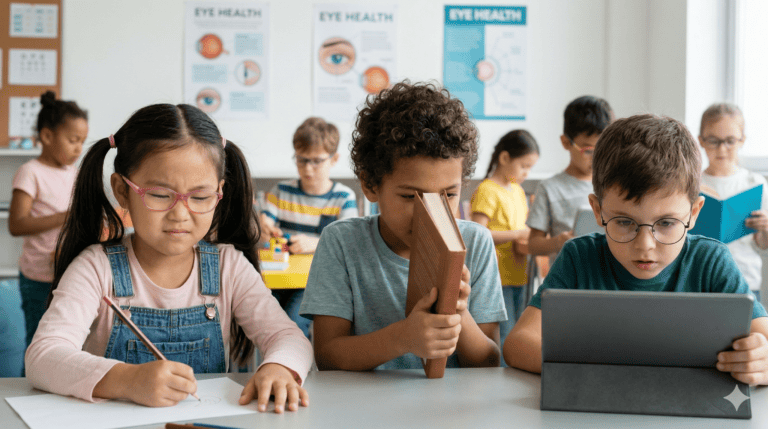
Concerns about children’s myopia, screen time, homework habits, near work, and outdoor activity are more pertinent than ever as the modern school year becomes more and more digital. Today’s parents must strike a careful balance between their child’s long-term eye health and academic achievement. Understanding how these factors interact is crucial for preventing and managing childhood myopia, as students spend more time on devices for schoolwork and less time outside.
Understanding Myopia in Kids in the Digital Age
People with myopia, or nearsightedness, can see things that are close to them clearly but not things that are far away. In the last few years, it has become much more common in kids, which has worried eye care professionals all over the world.
It’s not just a coincidence that more kids are getting myopia. It closely follows changes in how people live. More homework done on digital devices, less time spent playing outside, and more time spent working close to the screen are all things that are making the problem worse. In busy city like New York City, where schoolwork is often more demanding and living indoors is more common, these risks can be even worse for families.
The Role of Screen Time in Myopia Development
Digital screens are now an important part of learning. Kids are spending more time than ever looking at things that are close to them, like tablets, laptops, smartboards, and online assignments.
Recent studies have established a definitive correlation between screen time and myopia. Every hour of screen time you add to your day raises your risk of getting myopia. The risk goes up a lot when kids spend one to four hours a day on screens.
This doesn’t mean that screens should be gotten rid of, but it does show how important it is to use them in moderation and with care. Different devices can also have different effects. Computers and TVs have bigger screens than smartphones and other handheld devices, which may make them harder to see. However, all of these devices add to the amount of near work we do.
Homework and Near Work: A Hidden Strain
Kids have always had homework, but the way they do it has changed a lot. Reading, typing, or using screens for long periods of time is often part of today’s homework.
This kind of long-term focus on things that are close by. People who work close to things put stress on their eyes. This strain can make the eyeball longer over time, which is one of the main things that causes myopia.
It’s not just homework on the computer. When done for long periods of time without stopping, traditional reading, writing, and studying can also help. The problem isn’t so much with the activity itself as it is with how long it lasts, how you sit, and how often you take breaks.
Signs Your Child May Be Experiencing Eye Strain
Parents should watch for early indicators that near work is affecting their child’s vision:
- Squinting when looking at distant objects
- Complaints of headaches or tired eyes
- Holding books or devices very close
- Difficulty concentrating on schoolwork
- Frequent eye rubbing
Recognizing these signs early can make a meaningful difference in preventing further progression.
The Protective Power of Outdoor Activity
Recent studies have shown that kids who spend time outside are much less likely to get myopia. This is one of the best things that has come out of the study.
Studies have shown that spending at least two hours outside every day can help keep you safe. Natural light and the ability to see things far away help the eyes relax and encourage healthy vision growth.
This is very important after school. If a child goes from learning in the classroom to doing homework inside to having fun on screens, their eyes may not get a break from close work very often.
Why Outdoor Time Matters
Outdoor environments provide unique visual and biological benefits:
- Exposure to natural light helps regulate eye growth
- Looking at distant objects reduces eye strain
- Physical activity supports overall health and development
- Breaks from screens reset visual focus
For families in New York City, incorporating outdoor time might mean visits to local parks, playgrounds, or even structured sports after school.
Finding Balance: Practical Strategies for Parents
Protecting your child’s vision doesn’t mean eliminating screens or reducing academic effort. Instead, it’s about creating a balanced routine that supports both learning and eye health.
1. Follow the 20-20-20 Rule
Encourage your child to take a break every 20 minutes by looking at something 20 feet away for at least 20 seconds. This simple habit can reduce eye strain significantly.
2. Set Reasonable Screen Time Limits
While schoolwork may require screen use, recreational screen time can often be adjusted. Aim to keep total daily screen exposure as low as realistically possible, especially outside of academic needs.
3. Prioritize Outdoor Activities
Make outdoor play a non-negotiable part of your child’s daily routine. Whether it’s sports, walking, or free play, consistency is key.
4. Create a Vision-Friendly Study Environment
Ensure your child’s workspace supports healthy vision:
- Good lighting to reduce eye strain
- Proper screen distance (at least arm’s length)
- Upright posture
- Minimal glare from screens
5. Schedule Regular Eye Exams
Routine eye exams are essential for detecting early signs of myopia and monitoring progression. Early intervention can help slow or manage the condition effectively.
The Long-Term Importance of Early Prevention
People with myopia need more than just glasses. Having a lot of myopia later in life raises the risk of serious eye problems, such as retinal problems and vision loss.
By dealing with habits early on, especially in school. Parents can help keep their child’s eyes healthy in the long run by doing a few things.
A powerful way to stop something from happening is to cut down on screen time, do homework in a balanced way, and spend more time outside.
Supporting Healthy Vision During the School Year
The digital school year is here to stay, but that doesn’t mean kids’ eyes have to suffer. Families can make their homes a place where academic success and good vision go hand in hand by making small changes and sticking to good habits.
These strategies are even more important in a fast-paced city like New York, where academic standards are high and screen time is often unavoidable. Small changes that you make every day, like going outside after school or taking regular breaks to look at something, can have a big effect.
Final Thoughts
Protecting against myopia in kids requires awareness, balance, and proactive care. Screens, homework, and after-school routines all play a role but so do simple, effective habits like outdoor play and regular eye exams.
By understanding the risks and taking practical steps, parents can help ensure their children maintain healthy vision throughout the school years and beyond.
Call 800-936-0036 or schedule your appointment at Compton Eye Associates in Manhattan today.
FAQ SECTION
1. How does screen time affect myopia in children?
Excessive screen time increases the risk of myopia in children. Long hours of focusing on close-up screens strain the eyes and may lead to vision changes. Limiting non-essential screen use and encouraging breaks can help protect eye health.
2. What is the 20-20-20 rule for eye strain?
The 20-20-20 rule helps reduce eye strain during near work. Every 20 minutes, children should look at something 20 feet away for at least 20 seconds. This simple habit relaxes eye muscles and lowers fatigue.
3. How can parents balance homework, screens, and eye health?
Parents can create a balanced routine with regular breaks, outdoor play, and proper study setup. Keep screens at a safe distance, ensure good lighting, and schedule eye exams. These habits support both learning and long-term vision health.