Myopia Control Options in 2025: What Parents Are Hearing About
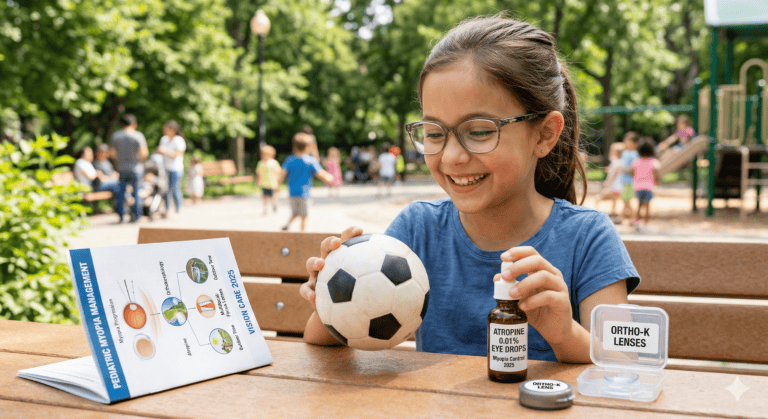
Myopia in kids is becoming one of the most talked-about vision concerns among parents today. From orthokeratology and specialty contact lenses to low-dose atropine and new spectacle technologies, families are hearing about more options than ever before. Understanding these treatments and how they work together can help parents make informed decisions about protecting their child’s long-term vision.
Why Myopia in Kids Is Getting So Much Attention
Myopia, or nearsightedness, is no longer just about needing glasses to see the board at school. It is now well known that this condition gets worse over time and can make serious eye health problems more likely later in life if not treated.
Parents in places like New York City are becoming more proactive. They are asking not only how to fix their kids’ eyesight, but also how to keep it from getting worse. That change shows that more people are aware that myopia progression is linked to the eye getting longer, which can cause problems like retinal problems in adulthood.
People don’t talk about “fixing vision” as much these days as they do about “controlling progression.”
What’s Driving the Rise in Myopia?
While genetics play a role, environmental factors are a major contributor to the rise in myopia in kids. Increased screen time, reduced outdoor activity, and prolonged near work all contribute to faster progression.
Modern research continues to emphasize that lifestyle adjustments especially more time outdoors are a foundational part of myopia management.
The Big Three Myopia Control Options in 2025
Parents are most commonly hearing about three evidence-backed treatments. Each works differently, and in many cases, they may be combined for better outcomes.
1. Specialty Contact Lenses (Multifocal or Dual-Focus)
Soft contact lenses designed specifically for myopia control have become one of the most popular options.
These lenses do more than correct blurry vision they also alter how light focuses on the retina, helping slow eye growth. Dual-focus lenses, such as MiSight, have shown strong results in reducing progression over multiple years.
What parents like about this option:
- Non-invasive and easy to adapt to
- Worn during the day like regular contacts
- Backed by strong clinical research
2. Orthokeratology (Ortho-K)
Orthokeratology, often called Ortho-K, involves wearing specially designed rigid contact lenses overnight. These lenses gently reshape the cornea while the child sleeps, allowing clear vision during the day without glasses or contacts.
Beyond convenience, Ortho-K has been shown to significantly slow the progression of myopia.
Parents often appreciate:
- Daytime freedom from glasses or contacts
- Strong effectiveness in slowing eye growth
- A non-surgical approach
However, it does require careful hygiene and consistent follow-up to ensure safety.
3. Low-Dose Atropine Eye Drops
Atropine drops are one of the most widely discussed pharmaceutical options for myopia control in kids. Used nightly, these drops help slow the elongation of the eye.
Recent studies show that lower concentrations (such as 0.05%) can be particularly effective while minimizing side effects.
Why parents consider atropine:
- Simple nightly routine
- Effective for a wide range of children
- Can be combined with other treatments
Emerging Options Parents Are Hearing About
In 2025, the conversation has expanded beyond the traditional treatments. New technologies and combination approaches are gaining traction.
Advanced Myopia-Control Glasses
Specially designed spectacle lenses now incorporate optical features that help reduce peripheral defocus, a key factor in myopia progression.
These glasses look like regular eyewear but are engineered to slow eye growth, making them an appealing option for younger children or those not ready for contact lenses.
Combination Therapy
More eye care professionals are recommending a multi-modal approach. For example:
- Atropine drops + specialty contact lenses
- Orthokeratology + lifestyle changes
This layered strategy may offer enhanced effectiveness, especially for children with rapidly progressing myopia.
The Role of Lifestyle in Myopia Control
Even with advanced treatments, lifestyle habits remain essential.
Parents are increasingly advised to:
- Encourage at least 1–2 hours of outdoor time daily
- Limit prolonged screen use
- Promote regular visual breaks during near work
These simple changes can complement clinical treatments and improve outcomes.
How to Choose the Right Option for Your Child
There’s no one-size-fits-all solution for myopia in kids. The best approach depends on several factors, including:
- Age of the child
- Rate of myopia progression
- Lifestyle and daily activities
- Comfort with contact lenses or eye drops
An eye care provider will typically perform a comprehensive evaluation and recommend a personalized treatment plan.
For families in New York and beyond, access to advanced diagnostic tools and specialized care has made it easier than ever to tailor treatment.
What Parents Should Expect Moving Forward
Myopia control is not a one-time fix. It’s an ongoing process. Regular follow-ups are essential to monitor progression and adjust treatment as needed.
Parents should expect:
- Routine eye exams every 6–12 months
- Possible adjustments in treatment strategy
- Continuous education as new options emerge
The good news is that with early intervention and consistent care, the progression of myopia can often be significantly slowed.
Why Early Action Matters
One of the biggest takeaways parents are hearing in 2025 is this: the earlier you start, the better the outcome.
Children who begin myopia control treatments early tend to experience slower progression overall. Waiting until vision worsens significantly may limit the effectiveness of certain interventions.
That’s why routine pediatric eye exams are more important than ever.
Final Thoughts for Parents
The growing conversation around myopia in kids reflects a major shift in eye care. From reactive to proactive.
Parents today are empowered with more tools, more knowledge, and more options than ever before. Whether it’s specialty contact lenses, orthokeratology, atropine drops, or emerging technologies, the goal is the same: protect your child’s vision for the future.
With guidance from experienced eye care professionals and a personalized treatment plan, managing myopia is not only possible, it’s highly effective.
Call 800-936-0036 or schedule your appointment at Compton Eye Associates in Manhattan today.
FAQ SECTION
- What is myopia control, and why is it important for kids?
Myopia control focuses on slowing the progression of nearsightedness, not just correcting vision. It helps reduce the risk of serious eye conditions later in life. Early treatment can protect long-term eye health.
- What are the most effective myopia control treatments in 2025?
The top options include specialty contact lenses, orthokeratology (Ortho-K), and low-dose atropine eye drops. Each method works differently, and doctors often combine them for better results.
- At what age should myopia control begin?
Myopia control can start as soon as myopia is diagnosed, often between ages 5 and 12. Starting early usually leads to better outcomes and slower progression.